Explore the Permanent Collection

Step inside the world of Frank Lloyd Wright and discover the remarkable objects, artworks, and design elements that reveal his creative vision, personal life, and enduring philosophy. The Trust’s Permanent Collection brings together architectural works and design elements, fine and decorative arts, and personal and cultural artifacts- many of which can be experienced in the very spaces where Wright lived and worked. At the Frank Lloyd Wright Home and Studio, explore remarkable pieces from the collection displayed in their original context, including Wright’s dining room furniture suite, a rare oak print stand designed for his collection of Japanese prints, and leaded glass windows that reveal the evolution of his innovative designs. At the Frederick C. Robie House, discover additional treasures from the Permanent Collection, such as an original slatted high-back dining chair designed by Wright for the Robie House dining room, as well as an original Peacock Side Chair, created by Wright in the early 1920s for the Peacock Banquet Room at the Imperial Hotel in Tokyo.
Browse the Collection
Discover the details that bring Frank Lloyd Wright architecture to life through a collection of original architectural elements and design objects. The collection includes art glass, windows, freestanding furniture, building materials, and decorative lighting elements. Many of these objects offer a close look at Wright’s approach to materials, craftsmanship, and design. At the Frank Lloyd Wright Home and Studio, visitors can experience select pieces in their original context, including a custom Japanese print display table and dining room chair designed by Wright. At the Frederick C. Robie House, visitors can discover original furnishings including a custom-designed highchair Wright created for his son, Robert Llewellyn. Together, these objects reveal the depth of Wright’s design practice- from the structure of a building to the smallest details that shape the experience of a room.
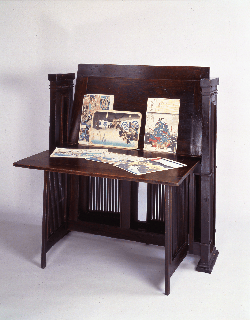
Japanese Print Display Table
Frank Lloyd Wright, ca. 1895-1905
Poplar, pine
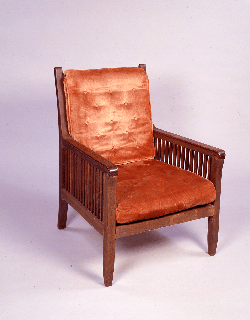
Armchair
Frank Lloyd Wright, ca. 1893
Wood, oak, woven fabric
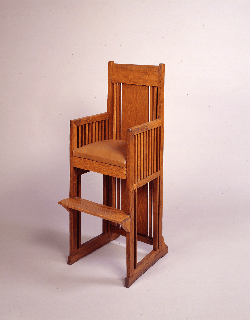
Highchair
Frank Lloyd Wright, ca. 1903
Wood, oak, leather
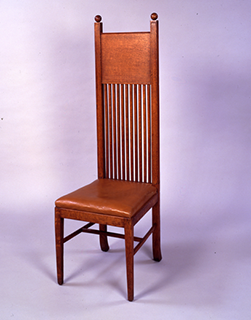
Dining Room Chair
Frank Lloyd Wright, ca. 1895
Wood, leather
Discover the artistic influences and cultural connections that shaped Frank Lloyd Wright’s creative vision through our collection of paintings, original Maginel Wright Barney drawings, Japanese prints, sculptures, and decorative objects. These works offer a closer look at Wright’s lifelong belief that art and architecture were deeply connected, while also revealing the artists, ideas, and relationships that influenced his work. At the Trust, visitors can experience select works from the collection, including a series of drawings Frank Lloyd Wright created during his honeymoon with Catherine Wright. These intimate works offer a glimpse into Wright’s artistic practice beyond architecture, capturing landscapes and experiences that inspired him during his early period of life and career. Also on display is an oil painting by William Wendt, depicting an autumn landscape. Wendt began his career in Chicago in the 1890s before moving to California, where he established himself as a prolific landscape artist. In 1909, he exhibited at the Art Institute of Chicago, where he sold 16 paintings, including one purchased by Frank Lloyd Wright. That autumn landscape, now displayed at Home and Studio, offers a direct connection between Wright and the artists whose work he admired and collected. Amongst the collection are objects or memorabilia Wright acquired during his travels abroad, including multiple Japanese prints and sculptures, like the Tomb Figure of Archer on Horseback. Together, these works reveal the breadth of Wright's artistic world and invite visitors to explore the art, cultural relationships, travels, and creative influences that shaped his enduring legacy.
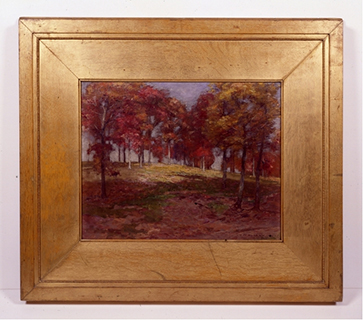
William Wendt
Untitled Autumn Landscape, ca. 1898
Oil on canvas
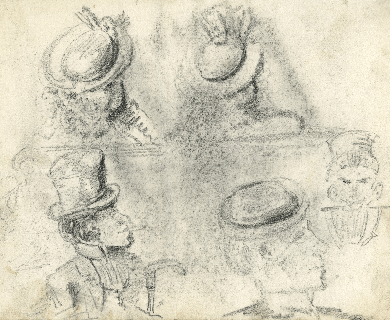
Frank Lloyd Wright
Drawing of Residence with Figures in a Landscape, 1889
Pencil on paper
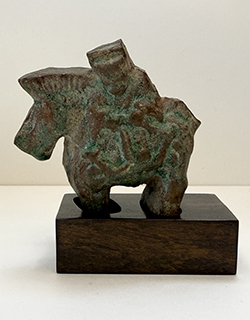
Tomb Figure of Archer on Horseback
Han Dynasty (210 B.C. - 221 A.D.)
Green lead-glazed eathenware
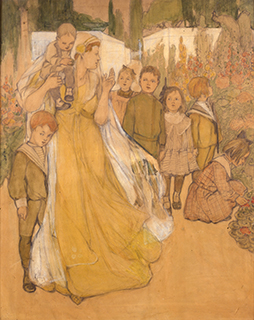
Maginel Wright Enright Barney
Untitled Portrait of Catherine and
Chilcdren, ca. 1905
Pastel on wood
Explore the objects that offer a more personal glimpse into Frank Lloyd Wright’s life, interests, and the world in which he lived and worked. The collection brings together everyday objects and personal belongings associated with Wright, his family, and the culture of his time, revealing details of daily life beyond his architectural work. Objects include personal and household materials such as clothing and wardrobe items, toys, kitchenware, cookware, tableware, drafting tools owned and used by Wright, and other objects connected to his domestic and personal life. At the Frank Lloyd Wright Home and Studio and the Frederick C. Robie House, visitors can encounter select objects that help bring these personal stories to life. Seen alongside Wright’s architecture, these artifacts offer a tangible connection to the people who lived within these spaces and the everyday experiences that shaped their lives. These objects invite visitors to look beyond Wright the architect and discover the person behind the work- his family, interests, routines, and the cultural world that surrounded him.
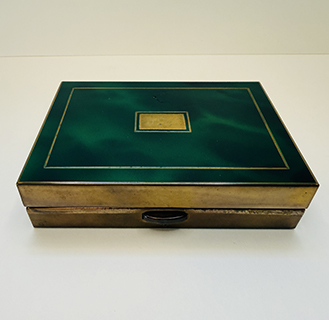
Musical Cigarette Case
Brass and enamel, ca. 1925
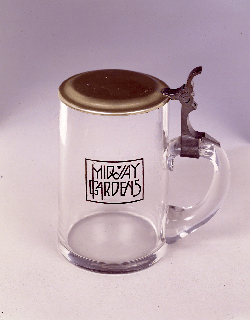
Midwest Gardens Beer Mug
Glass and pewter, ca. 1913-1914
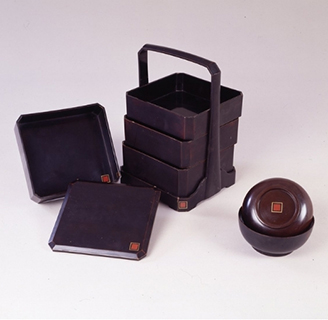
Japanese Wooden Lacquerware
Wooden lacquerware, 1906
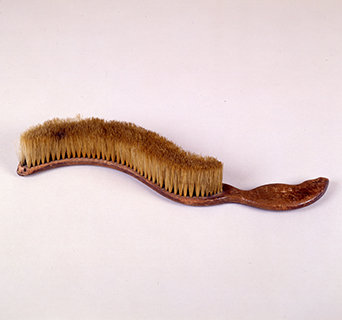
Drafting Brush
Wood, pig bristles, ca. 1900
Over the past 40 years, the Trust’s collections have grown through gifts and bequests donated by public-spirited individuals. The Trust’s collections were primarily acquired through gifts- an extraordinary testament to the generosity of our donors, members, and volunteers. To inquire about donating to the Trust’s collection, please contact the Archivist and Collections Manager, Andria Castillo at acastillo@flwright.org or Preservation Architect, Cathi Ward at cward@flwright.org. All donations adhere to the following procedures. When a prospective donor contacts the Trust regarding a potential donation, they are asked to complete a Donation Inquiry Form which provides detailed information about the object(s), including photographs, provenance, ownership history, and any supporting documentation. This information allows us to determine whether the proposed donation is appropriate for the Trust’s collection.
If the donation is approved for acquisition, a member of the collections staff will contact the donor, either via email or phone call, to arrange delivery of the object(s) to Home and Studio. At that time, the donor will complete and sign a Deed of Gift, which formally transfers unrestricted legal ownership of the donation to the Frank Lloyd Wright Trust. The donor will receive a copy of the signed Deed of Gift for their records, while the original will be permanently retained by the Trust as part of its collection’s documentation. Donors will also receive a letter of appreciation acknowledging their generous contribution.
Once the Deed of Gift has been signed, the donation becomes the legal property of the Frank Lloyd Wright Trust. The object will then be accessioned, cataloged, photographed, and preserved, ensuring its long-term stewardship for the benefit of future generations.
For any other additional questions, please reference our “Frequently Asked Questions" for additional information on donations to the collection.
The Frank Lloyd Wright Trust welcomes all inquiries from individuals interested in donating objects or archival materials that support its mission to preserve and interpret the life and legacy of Frank Lloyd Wright. Because of limited storage space, preservation resources, and collecting priorities, the Trust is unable to accept every proposed donation. All potential donations are carefully evaluated to ensure they align with the Trust’s scope of collections.
-
What types of items does the Frank Lloyd Wright Trust collect?
The Frank Lloyd Wright Trust accepts donations that support its mission to preserve and interpret the life, work, and legacy of Frank Lloyd Wright. Proposed donations may be considered for the Permanent Collection, Archival Collection, or Interpretative Collection, depending on their historical significance, research value, and intended use. All submissions are evaluated according to the Trust’s collecting priorities. All proposed donations are evaluated in accordance with the Museum Collections Management Policy and Archival Policy. -
How do I donate an item?
If interested in donating an object or material to the Frank Lloyd Wright Trust, please contact the Archivist and Collections Manager, Andria Castillo at acastillo@flwright.org or Preservation Architect, Cathi Ward at cward@flwright.org. Share as much information as possible about the proposed donation, including photographs, its history, provenance, and connection to the Trust’s mission. After review, if the item is determined to be an appropriate and valuable addition to the collection, we will invite you to complete a Donation Inquiry Form and provide any supporting documentation available. -
How are donations evaluated?
Every proposed donation is carefully reviewed to determine whether it aligns with the Trust’s collecting mission. During the review process, staff take into consideration multiple aspects including object’s historical significance, provenance, condition, research, educational value, and the Trust’s ability to properly preserve and care for it. Submission of a Donation Form does not guarantee acceptance into the collection. Additional information or documentation may be requested as part of the review process. -
Do I need to be the legal owner of the item?
Yes. Our Donation Form also requires donors to indicate whether they are the legal owner of the materials being offered. If you are not the legal owner, ownership information must be provided before the Trust can consider the donation. This helps ensure that the Trust can legally accept the transfer of ownership if the donation is approved. -
What happens if my donation is not accepted?
You may choose to retrieve any items that are not accepted (in the case of shipping, arranging and paying for their return), or authorize the Trust to dispose of unaccepted items on your behalf. These preferences help ensure that the Trust and the donor have a clear understanding of how materials will be handled if they are not added to the collection. Donors are also asked to indicate their preference on the Donation Form before submitting materials. -
Can the Trust appraise my item or tell me what it is worth?
The Frank Lloyd Wright Trust does not provide monetary appraisals or estimates on the financial value of objects. If you require an appraisal for insurance, tax, estate, or donation purposes, you should consult a qualified independent appraiser. -
Can I bring or ship my item without contacting the Trust first?
Please do not bring or ship objects to the Frank Lloyd Wright Trust without prior approval from either the Archivist and Collections Manager or Architectural Preservationist. Submitting a Donation Inquiry Form before delivering an item helps ensure that staff can properly evaluate the proposed donation and make appropriate arrangements if the object is accepted for further review and consideration. -
Who can I contact if I have questions?
If you are unsure whether your item falls within the Trust’s collecting scope or have questions about the donation process, please contact the Archivist and Collections Manager, Andria Castillo at acastillo@flwright.org or Preservation Architect, Cathi Ward at CWard@flwright.org. The Collections staff are happy to answer questions and help determine whether your item may be appropriate for consideration.